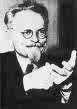
 Fireworks in a recent discussion on BBC Radio 4’s Great Lives programme. Invitee Christopher Hitchens chose as his ‘great life’ that of Leon Trotsky. Although no longer a man of the left apparently, Hitchens wanted Trotsky as his great life and wanted to discourse effusively about him in plumy tones pretty much from the perspective of his student days in the International Socialists.
Presenter and ex-Tory MP Matthew Parris and historian Robert Service did not, however, let
 him get with this, quickly raising the issue of Trotsky’s endorsement of state terror and his chilling view of men as violent apes without tails, a remark that de Maistre would have been proud of. Quite true, said Hitchens and terror was well, sort of necessary in the circumstances etc - a tired old far left defence, both morally and politically dubious, although I wasn’t clear if at and at what point his endorsement of Bolshevik regime want and whether he thought the suppression of the Kronstadt uprising a turning point or not.
When Hitchens sought to avoid addressing Trotsky’s contradictory attitude towards the Soviet regime and the question of what a Trotsky-led USSR of 1920s been like (bureaucratic and repressive, but with slower industrial development, a small private section, a smaller gulag and decent literary criticism, I suspect) Hitchens waffled about the importance of a programme and certain political generation etc. Why then, they, asked why he had chosen to speak on Trotsky at all if his personal qualities and views were of no real interest? Here Hitchens lost his cool and seemed about to walk out. However, they then they then cut the tape and finished the programme with a short, uncomfortable edited-in final exchange.


1 comment:
Trotsky believed in the "permanent revolution" i.e. the Bolshevik revolution could not succeed without a concurrent revolution in the industrialized countries of the West. Stalin's vision of building "socialism in one country" was thus doomed to failure and degeneration. In practice Trotskyites end up opposing national liberation movements and supporting reactionary regimes.
Post a Comment